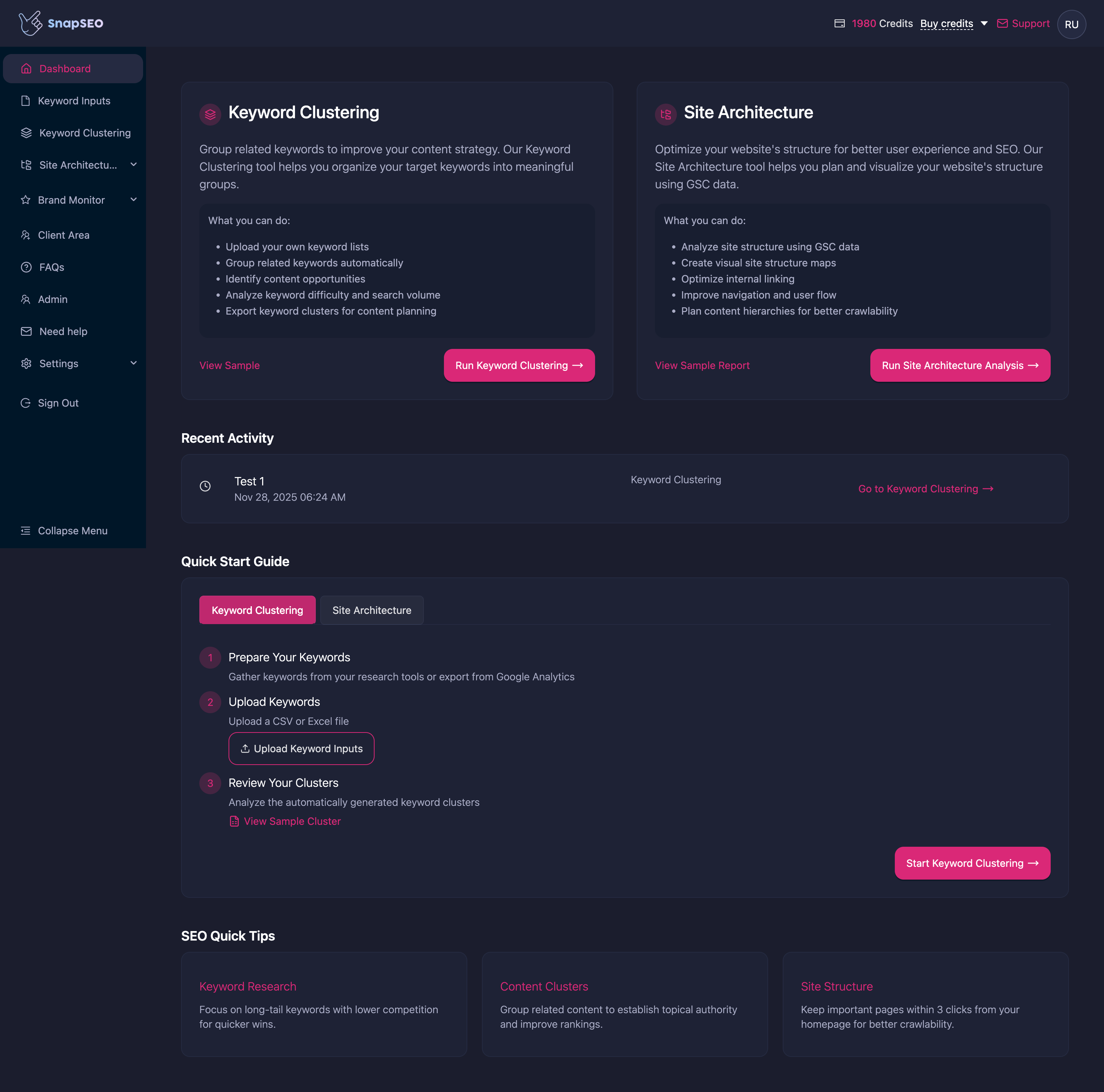
Group Keywords by Search Intent, Not Guesswork
Upload your keyword list, get back organized clusters based on SERP similarity. Primary keywords identified, intent labeled, ready to fuel your content strategy.

Thousands of Keywords. Zero Organization.
You've got the keyword list. Now what? Manually grouping keywords by intent is tedious, subjective, and doesn't scale
Without clustering:
- Same content targets overlapping keywords (cannibalization)
- Missed opportunities to consolidate ranking power
- Content strategy based on gut feel, not data
- Hours spent in spreadsheets trying to make sense of keyword dumps
SERP-Based Clustering in One Click
Upload your keyword list. NeurativeAI analyzes SERP overlap to group keywords that should target the same page. Get organized clusters with primary keywords, volume data, and intent labels—ready to drive your content strategy.
From Keyword List to Content Roadmap
1. Upload Your Keywords
Bulk upload your keyword list—hundreds or thousands, no problem.
2. SERP Similarity Analysis
We analyze which keywords return similar search results. Keywords with overlapping SERPs belong together.
3. Get Organized Clusters
Each cluster includes a primary keyword (highest volume), supporting keywords, total cluster volume, and intent classification.
4. Export & Execute
Export to Google Sheets or Word. Use clusters to plan content, inform Site Architecture, or feed into Topic Expansion.
Standard Clustering, Seamless Integration
Keywords clustered by actual search result overlap, not just semantic similarity. If Google shows the same results, they belong on the same page.
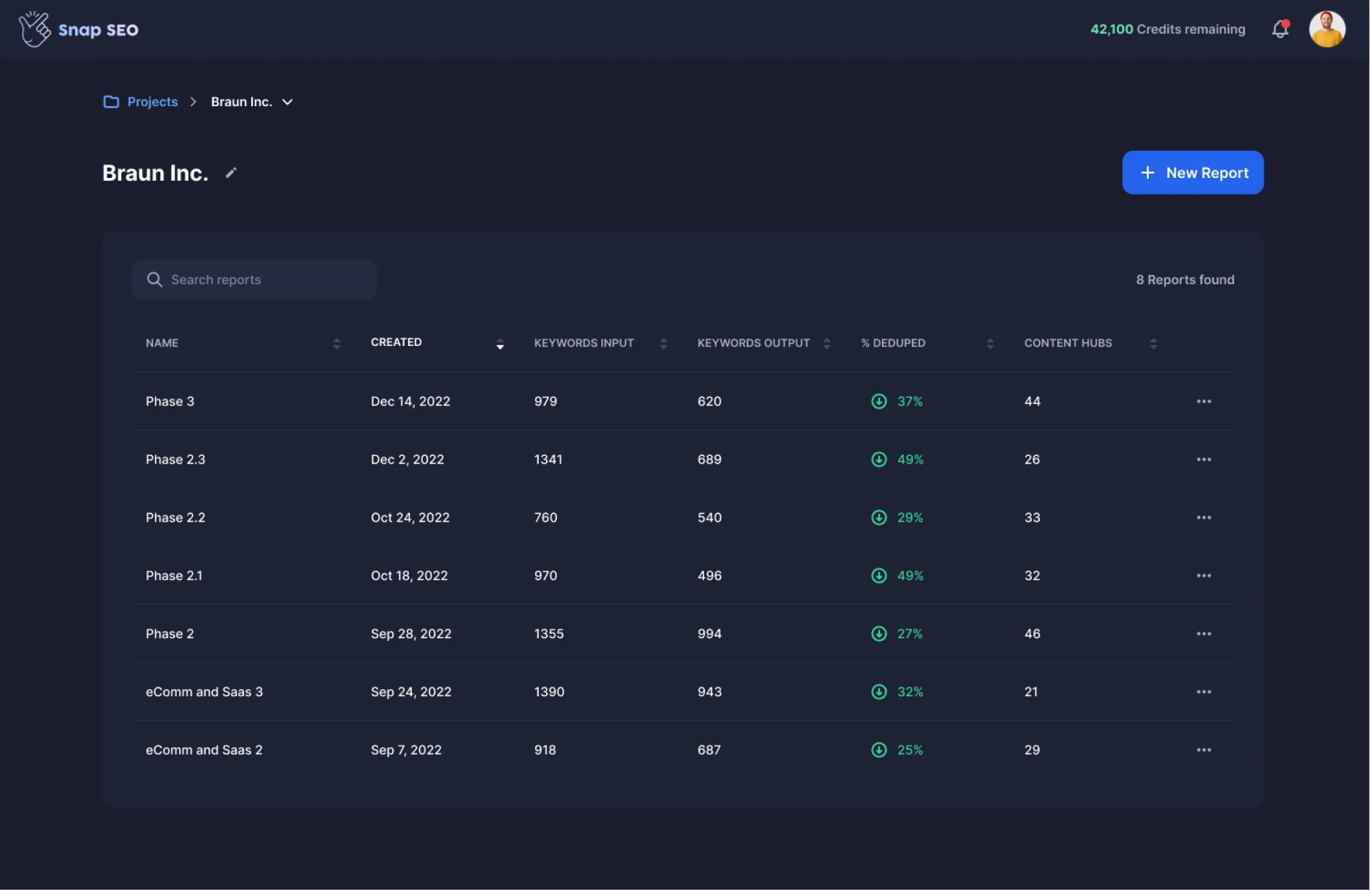
Each cluster surfaces the highest-volume keyword as the primary target. No guessing which keyword should lead.
Every cluster labeled with search intent—informational, commercial, transactional, navigational. Know what type of content each cluster needs.
See total search volume per cluster. Prioritize clusters with the biggest traffic opportunity.
Overlapping keywords consolidated. No more targeting the same intent across multiple pages.
Handle large keyword lists without breaking a sweat. Upload thousands, get organized output.
Export to Google Sheets or Word. Take your clusters wherever your workflow lives.

Keywords clustered by actual search result overlap, not just semantic similarity. If Google shows the same results, they belong on the same page.
Each cluster surfaces the highest-volume keyword as the primary target. No guessing which keyword should lead.
Every cluster labeled with search intent—informational, commercial, transactional, navigational. Know what type of content each cluster needs.
See total search volume per cluster. Prioritize clusters with the biggest traffic opportunity.
Overlapping keywords consolidated. No more targeting the same intent across multiple pages.
Handle large keyword lists without breaking a sweat. Upload thousands, get organized output.
Export to Google Sheets or Word. Take your clusters wherever your workflow lives.

How it compares:
| Field | Description |
|---|---|
| Cluster ID | Unique identifier for each keyword group |
| Primary Keyword | Highest-volume keyword in the cluster |
| Supporting Keywords | Additional keywords in the cluster |
| Cluster Volume | Combined search volume of all keywords |
| Intent | Informational, commercial, transactional, or navigational |
| Keyword Count | Number of keywords in the cluster |
How Agencies Use SERP Clustering
Content Consolidation
Identify keywords that should target the same page. Stop diluting ranking power across multiple URLs.
Content Planning
Turn keyword research into a structured content roadmap. One cluster = one content piece.
Cannibalization Prevention
See which keywords overlap before you create competing content.
Client Deliverables
Deliver organized keyword strategies, not raw keyword dumps. Clusters show strategic thinking.
Site Architecture Input
Use clusters to inform topic cluster structure and content pillar planning.
Benefits
📊 Data-Driven Grouping
SERP overlap, not subjective judgment. Keywords grouped by how Google actually treats them.
🎯 Clear Primary Targets
Highest-volume keyword surfaces automatically. No debating which keyword leads.
🏷️ Intent Visibility
Know what type of content each cluster needs before you start creating.
⏱️ Hours Saved
Manual clustering for 1,000 keywords? Days. NeurativeAI? Minutes.
🔗 Workflow Integration
Clusters feed directly into Site Architecture and Topic Expansion. One workflow, not disconnected tools.
📤 Flexible Export
Google Sheets or Word. Use clusters wherever your team works.
FAQ Section
We analyze the search results for each keyword in your list. Keywords that return similar results (high SERP overlap) get grouped together—they should target the same page.
The keyword with the highest search volume in each cluster becomes the primary. This is the keyword you'd optimize the page title and H1 around.
We use a preset threshold optimized for accurate clustering. Keywords need significant SERP overlap to be grouped together.
We handle lists with thousands of keywords. Bulk upload and let the clustering run.
Informational, commercial, transactional, and navigational—the standard intent framework used across SEO.
Yes. Export to Google Sheets or Word for easy sharing and further analysis.
Clusters inform Site Architecture (topic cluster planning), Topic Expansion (finding gaps within clusters), and content strategy overall. It's part of the workflow, not a standalone tool
Turn Keyword Chaos into Content Strategy
Upload your keywords, get organized clusters. Primary keywords identified, intent labeled, ready to drive your content roadmap.
Bulk upload, instant organization
to see SERP Clustering in action